
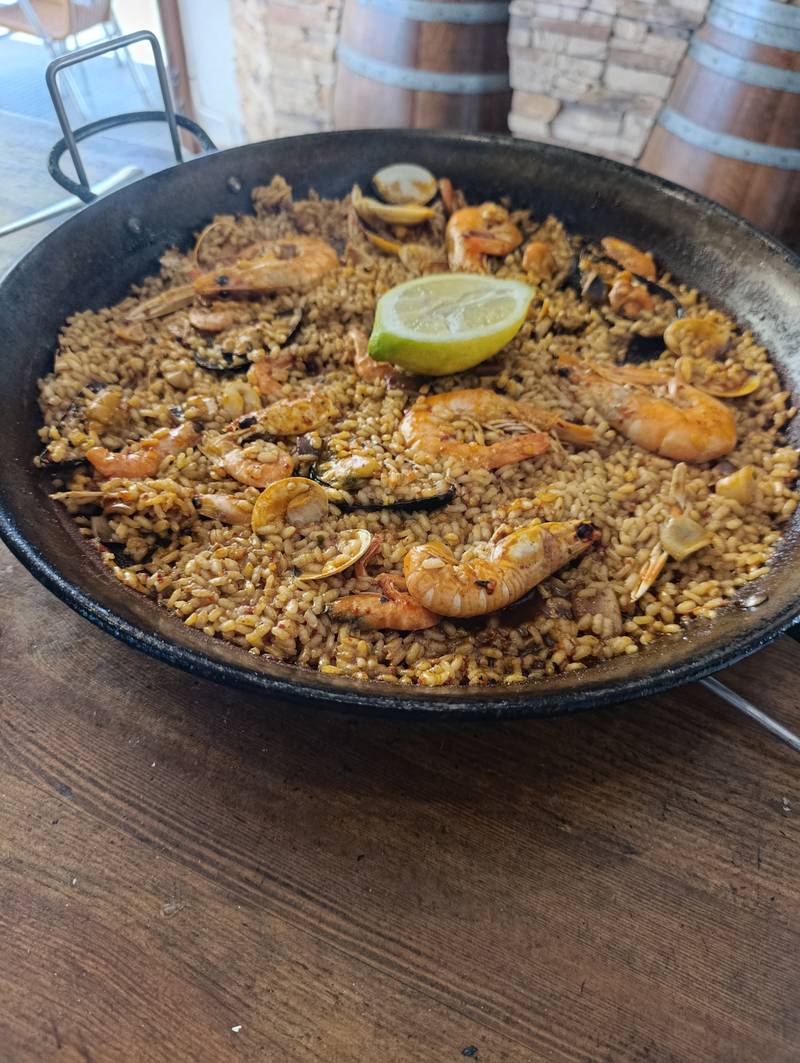
Faced with the menu of a Costa Blanca rice house, the first question is always the same: what's the difference between paella, arroz a banda and arroz del señoret? All three are made in a paella pan, all three are dry rice dishes and all three smell of the harbour. But they are not the same dish.
Paella: the rice with everything on show
In a paella, the ingredients are there to see and touch: whole prawns, mussels in their shells, a langoustine laid across the top. In the paella de marisco everything is sea; in the mixta sea and land share the pan. Eating paella is a hands-on exercise: you peel, you dip bread, you argue over the socarrat: that thin layer of toasted rice at the bottom which in many households is the most fought-over part.
Arroz a banda: the flavour without the work
‘A banda’ means ‘apart’ in Valencian: the fish is cooked separately to make a deep stock, and the rice is then cooked in that stock. The result is a humble-looking rice with enormous flavour, served with alioli. It's the purists' favourite: nothing to peel, everything to savour.
Arroz del señoret: everything peeled
Legend tells of a young gentleman who refused to get his hands dirty: hence the name. It's a seafood rice where everything arrives peeled and cut: prawns, cuttlefish, shelled mussels. You eat it with a spoon, without pause and without heroic napkin work. Ideal for anyone who wants the flavour of paella de marisco without the effort.
Which one to order?
If it's your first time in Altea: paella de marisco, for the spectacle. If you've peeled enough prawns in your life: señoret. If pure flavour and alioli are your thing: a banda. And if the table can't agree: mixta, and peace.
At La Tablería all four rice dishes are cooked to order, minimum two people, in around 30 minutes. Book your table; the rice is cooked fresh, in around 30 minutes.